



Introduction
For the last 4 years, we have seen the world of energy going from globalization to an era of political energy. More and more the energy map is merging with the political map.
And 2026 started in the same direction with the “kidnapping” of Venezuela president by the USA.
Beyond the political aspect, it rose many questions regarding its impacted on oil projects, given the giant reserves hold by Venezuela.
Venezuela Extra-Heavy crude oil
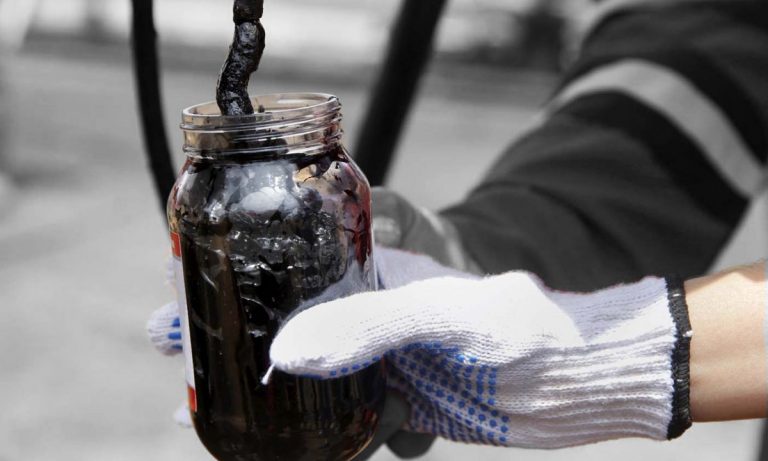
Extra-heavy crude is the type of oil that makes up the majority of Venezuela’s reserves. It is so viscous that if you pour it into a container and turn it upside down, it won’t flow out. In its natural state, Extra-Heavy crude oil cannot be transported.
Most of Venezuela 300 billion barrels of oil reserves are located in what is called the “Orinoco Belt”, the largest concentration of oil on the planet. Putting Venezuela in front of Saudi Arabia in term of pure reserves of oil.

How to produce oil in Venezuela ?
To produce this kind of oil, the only technology possible is using Progressive Cavity Pumps (PCP). PCPs are screw-type pumps that resemble helical screw compressors but operate at much lower speeds. Their role is to gently lift the oil from the reservoir to the surface.
The main challenge is continuously controlling the rotation speed of these pumps. If the speed is too high, it can create overpressure in the reservoir, potentially causing the well to collapse and allowing oil to mix with surrounding sand. When that happens, the well is permanently lost.
Precise control of PCPs is therefore critical. This is achieved using Variable Frequency Drives (VFDs), which power the electric motors of the pumps. However, VFDs generate electrical harmonics that must be eliminated.
Because PCP loads fluctuate constantly, harmonic levels also vary significantly and require dynamic filtering.
There are two main solutions:
- Passive filters, which use capacitor banks
- Active filters, which are essentially VFDs operating in reverse
Passive filters work well when harmonic levels are stable and predictable, which is not the case here. As a result, active filters are required, typically installed on a one-to-one basis with each VFD.
Each active filter detects the harmonics produced by its associated VFD and injects an opposing current with symmetrical harmonics, effectively canceling them out.
The combination of those technology is know but only mastered by a few Majors Oil & Gas companies, limiting the number of actors able to act projects of oil production in the country.
How to transport Venezuela Oil ?
As Extra heavy oil is viscous, there is no possibility to transport it as such, this oil needs to be transformed. To make this oil transportable, Upstream installations need an Upgrader.
Simply put, an upgrader is a refinery (around $1 billion per unit) installed at each field development, right after the production well.
Its purpose is to:
- Produce a solvent that is injected into pipelines to dilute the extra-heavy crude oil and make it transportable
- Treat the incoming mixture to separate oil, solvent, and sand
- Recover and recycle the solvent for reinjection
At the outlet of the upgrader, extra-heavy crude is transformed into heavy or light crude, depending on the operator’s specifications.
Upgraders are massive, complex facilities that include a power generation unit, separation units, thermal or catalytic processing trains, a solvent recovery system.
Venezuela oil Splendor and decay

Taken as a model of country development in Latin America, Venezuela was on track to become the richest country on the planet by producing 4 million barrel per day of oil, and exporting most of it.
Serie of political turmoils and embargos left no space for foreign investments and access to exporting market. As a result the oil production fell below the million barrel per day, just enough for the country consumption and a little export to China and Cuba.
PDVSA. Petróleos de Venezuela, S.A. the National Oil Company of Venezuela has seen its capital and workforce disappear in just a few years. The supply chain also left and installations were left to produce what could be done without maintenance or external supporting technology.
Could projects come back ?
On the paper, projects could come back due to strong US incentives for companies, and the opportunity to benefit from large reserves of oil.
But…
First problem, only a handful of actors, the IOCs, own the technology to produce oil in Venezuela. Limiting the chance of having a wave of projects, especially knowing many of those companies lost billions in Venezuela when the government seized the assets years ago.
Second, the political and economical environment is not clear yet, and even less stable to motivate actors pourring billions for long term investment. To be beneficial, extra heavy oil projects would need to run for a minimum of 20 years, which is currently a big gamble.
Third, the current strategy of OPEC to grow volume of production will most likely maintain a barrel price in the 50-65$ range for the next few years. Given the complexity of extra heavy crude production associated with the need for new exportation infrastructures, will put the production cost of a barrel in Venezuela higher than the barrel price.
Conclusion
Despite all the hope generated around Venezuela political turmoil at this begining of the year, Venezuelan projects would have hard time to come back massively in the next few years. The current legal, political and profit forecast are just not there to motivate companies to reinvest in the country.
To meet positive project environment the political situation in Venezuela would need to re open to international companies and stabalize with a long term political drive. Until then, projects in the country will remain highly hypothetics.
Interested in knowing more about Energy Projects?
2b1st Consulting is supporting companies working on Energy projects with data, expertise and network. Our experts have extensive knowledge of projects and have access to a granularity for all equipments and services.
If you want to know more about projects subscribe to our newsletter or contact us at Ask a demo